

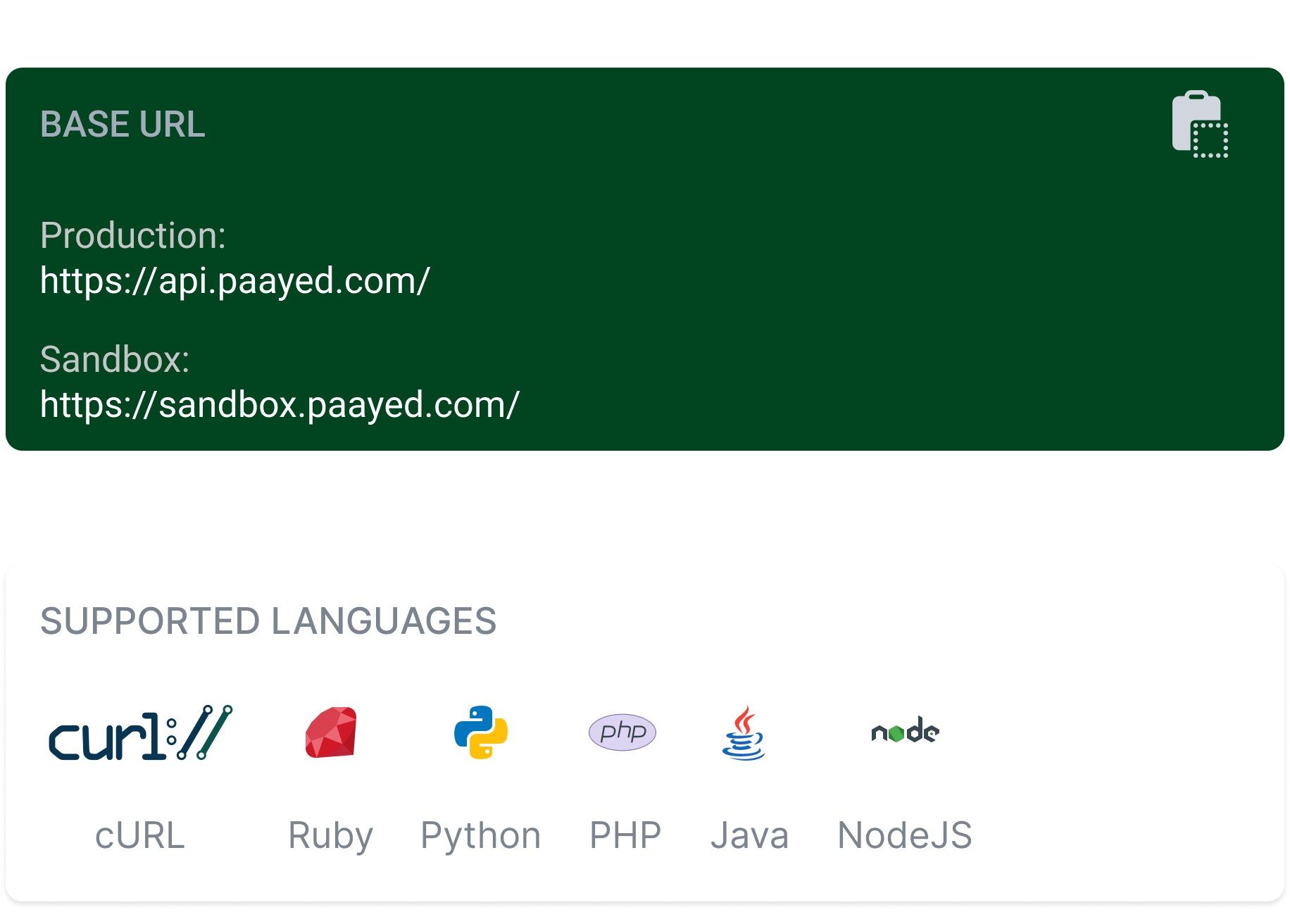
Paayed’s REST APIs let you build modern money experiences: onboard customers (KYC/KYB), open multi‑currency accounts, issue cards, accept and send payments, convert FX, and reconcile with real‑time webhooks.
Was this section helpful? Yes No
Use API keys for server‑to‑server calls and OAuth 2.0 for user‑delegated flows (Connect-style). Include your key in the header:
Was this section helpful? Yes No

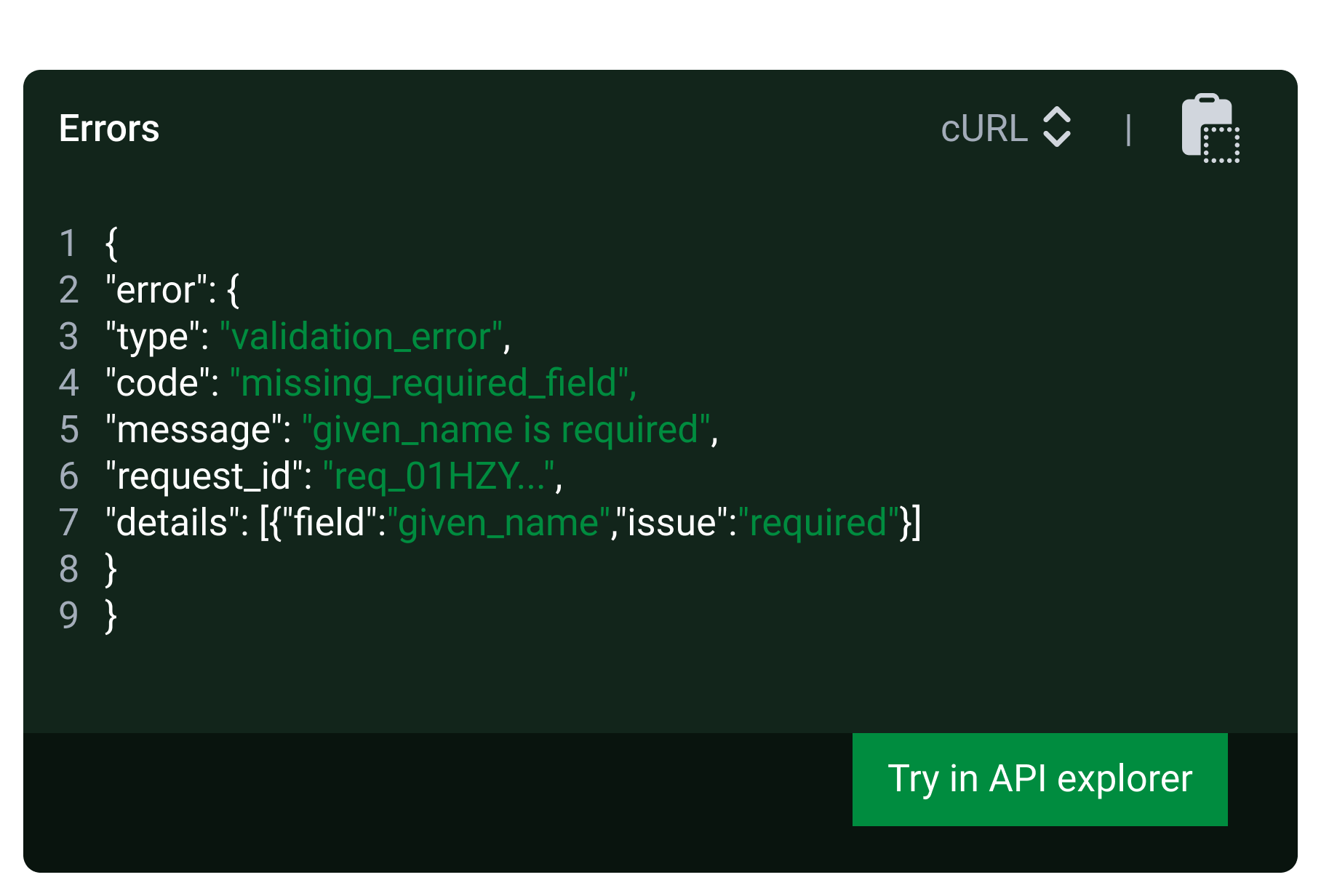
Paayed uses conventional HTTP status codes. Error body shape:
Summary
OK – Success.
Created – Resource created.
Accepted – Processing asynchronously.
Bad Request – Invalid payload.
Unauthorized – Missing/invalid credentials.
Forbidden – Insufficient scope/role.
Not Found – Resource missing.
Conflict – Duplicate / state conflict.
Unprocessable – Business rule failed (e.g., compliance block).
Too Many Requests – Rate limit.
Service error.
Was this section helpful? Yes No
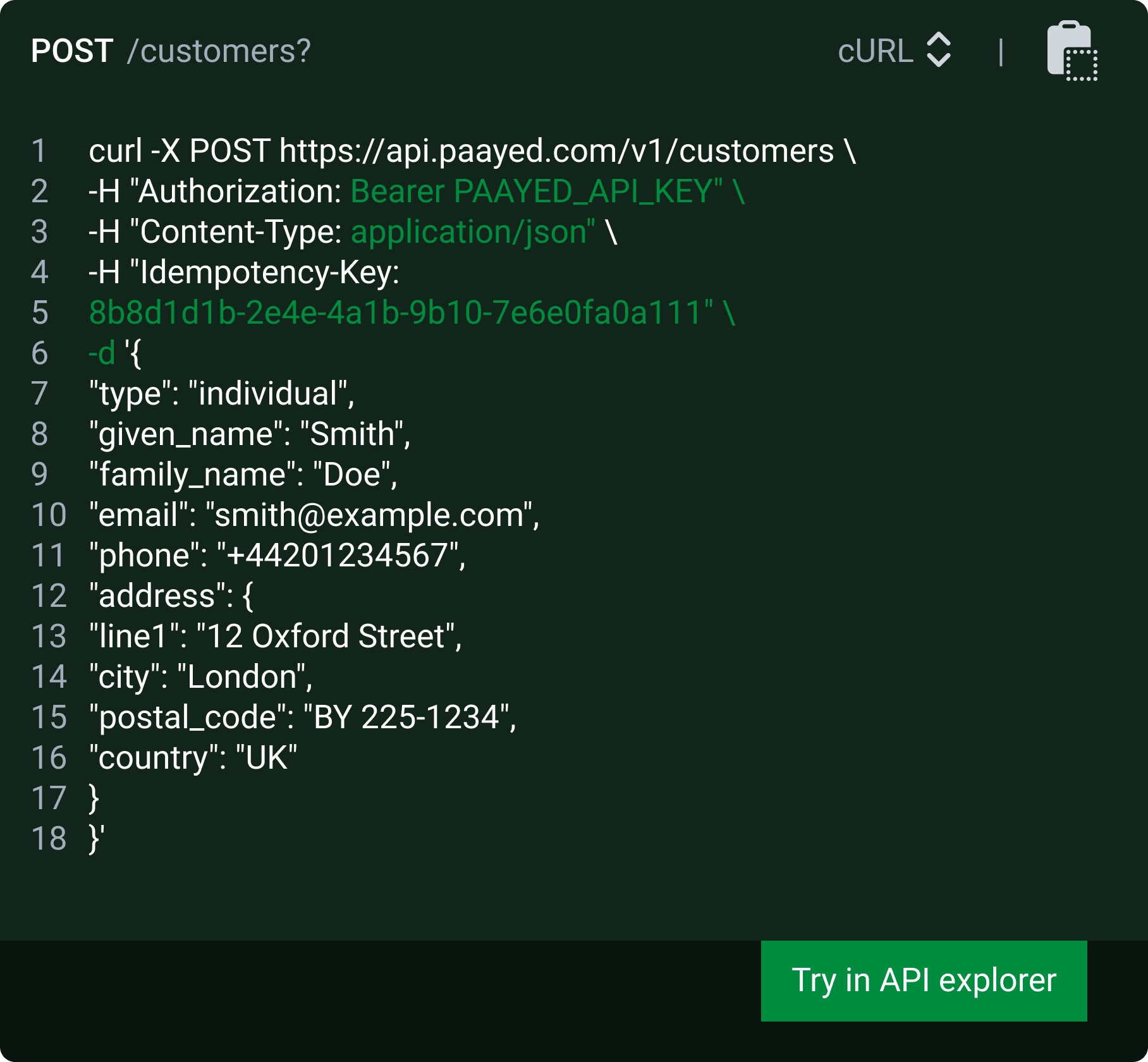
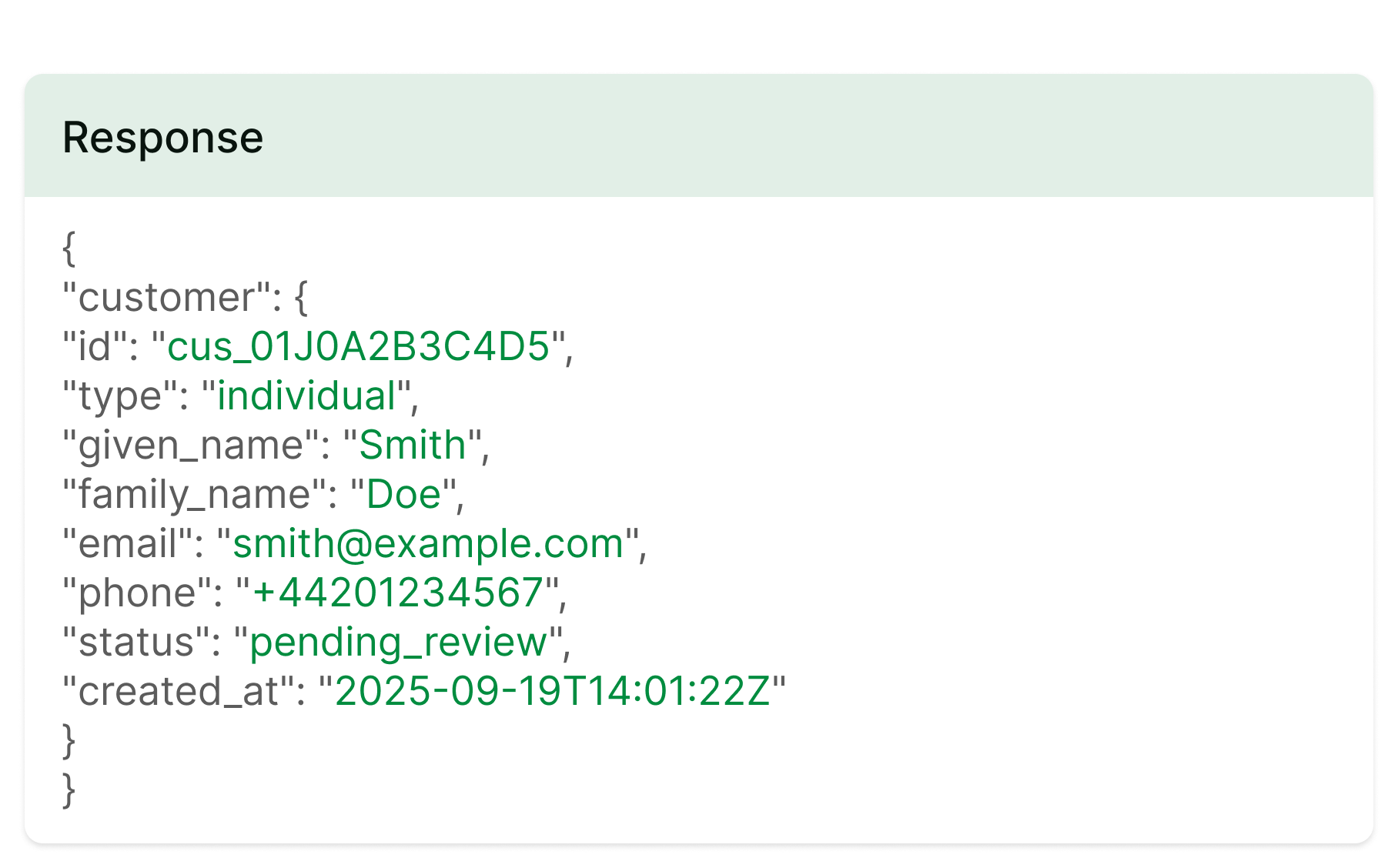
Create and manage individual or business customers for compliance and account ownership.
Conventions
Pagination:
cursor-based. Use limit and starting_after/ending_before. Responses include has_more and next_cursor.
Idempotency:
supply Idempotency-Key for mutation calls; same key + same payload → same result.
Timestamps:
ISO‑8601 UTC.
Amounts:
integers in minor units (e.g., cents). Currency ISO‑4217.
Webhooks:
signed with Paayed-Signature (HMAC‑SHA256). Tolerance: 5 minutes.
RESPONSES
RESPONSES
Customer given name
Was this section helpful? Yes No